Skip to content
Have a product idea?

MVP analysis and delivery (Boosted MVP)

Have a product idea but are unsure where to start? We take an MVP from scope analysis to a working release in front of users. First we define what belongs in the first version and which risks need checking, then we build the product iteratively, with regular demos and ongoing budget control. After launch, the same team develops and maintains it.

We respond within 3 business days. No mandatory call and no obligation.

The challenge

When does Boosted MVP make sense?

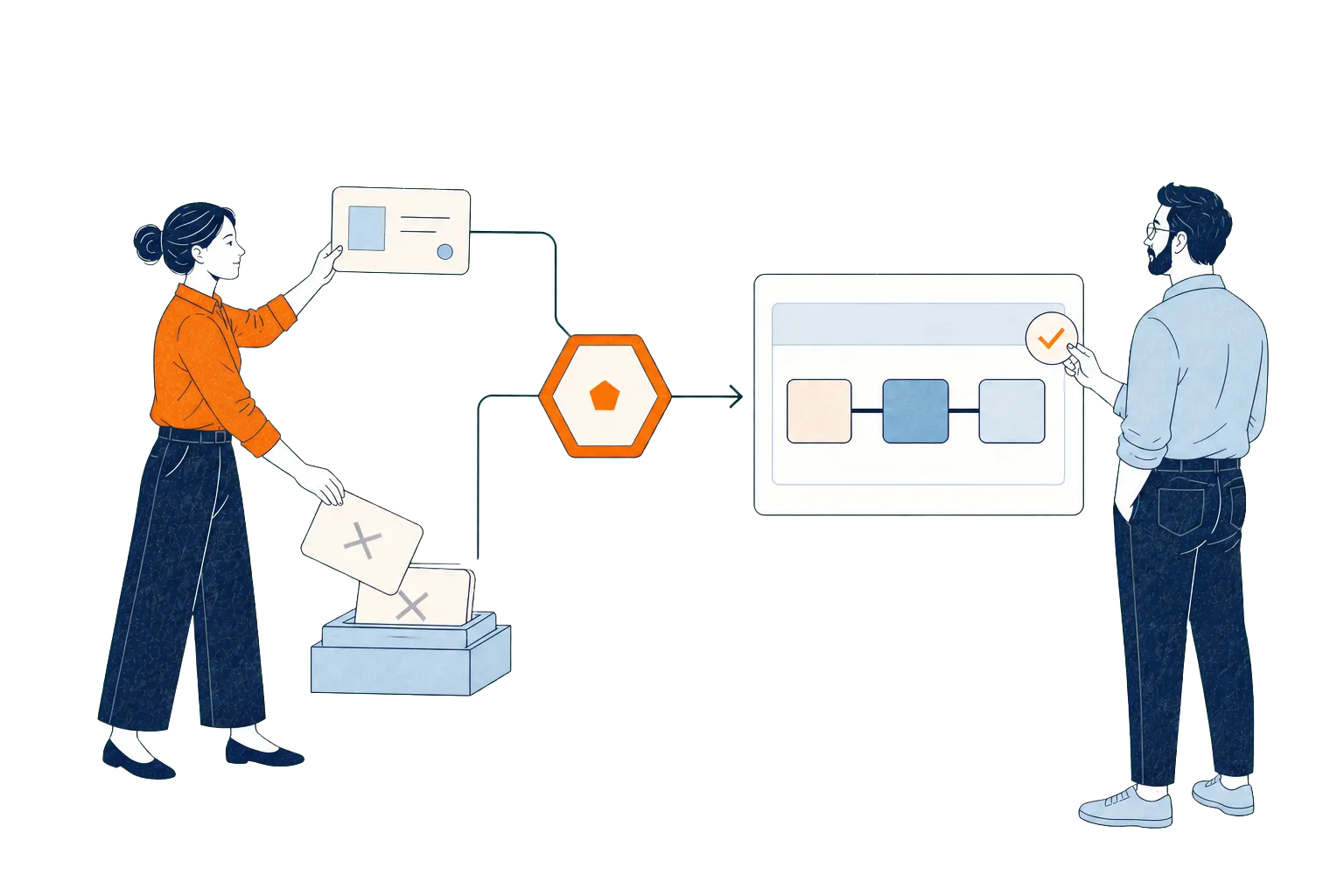
At the start, the hardest part is separating essential capabilities from features that only increase cost and delivery time. We begin with analysis: organising assumptions, naming risks and setting the first-release scope. Then we build it iteratively, so scope decisions are verified by a working product rather than a document alone. The analysis does not replace market validation - it answers what makes technical sense to build first.

Technical details and delivery approach

Boosted MVP is an accelerated start to a product: scope and risk analysis, followed straight away by building the first release. The analysis is led by Dawid, Hexacode’s founder and tech lead: what must be in the first release, what can wait, and which assumptions need checking before development. Then the same team ships the product iteratively, with regular demos, until it reaches users.

Products we have built from scratch

It is run by a team that ships products itself. We ran HistoriaSzkod.pl - a VIN report platform and public API - from architecture through maintenance. For an HR company, we built an event management system that cut event handling from 8 hours to 1 hour.

What happens after launch

After the product goes live, we can continue development and maintenance as your external IT team. If the scope goes beyond an MVP from the outset, see custom systems.

What we deliver
  • Scope analysis for the first release: what is essential and what can wait
  • Key assumptions and risks identified before development begins
  • A timeline and budget range, refined once requirements are clarified
  • Iterative delivery with regular demos of working product increments
  • Ongoing scope and priority control when early tests change the assumptions
  • Production launch, monitoring and documentation handover
  • After launch, the same team runs development and maintenance
Common scenarios

When Boosted MVP fits

Two common moments when a technical team has to define the scope and then actually ship it.

Scenario 01

A product idea without a technical team

A founder understands the market and customer problem but has no technical team to limit the first release, identify technical risks and build it.

How it works
  1. Description of the product, its users and the problem it should solve
  2. The founder and tech lead analyses MVP scope, assumptions and technical risks
  3. Iterative delivery of the first release with regular demos
  4. Launch, then development driven by what users actually do
The founder gets a working product rather than a document, without mistaking technical decisions for proof of market demand.
Scenario 02

An existing product and a new feature

A company wants to extend an existing product but first needs to define the smallest sensible scope and understand the impact on the current system.

How it works
  1. Description of the current product, technology stack and expected outcome
  2. Analysis of dependencies, integration risks and first-stage scope
  3. Delivery and launch of the first stage without stopping the current system
  4. Later stages planned on what the first one revealed
The company invests in the smallest sensible stage and sees its effect before committing to the next.
Process

How we take an MVP from idea to launch

You describe the product, users and problem

In a short form, explain who the product is for, what problem it solves, what has already been tested, and the timeline and budget you are considering.

Scope and risk analysis

The founder and tech lead reviews the assumptions, proposes a first-release scope, identifies the risks worth checking before development and sets a timeline and budget range. If information is missing, we follow up by email.

We build the first release iteratively

We work in short iterations, demo working increments regularly and adjust priorities when early tests change the assumptions.

Launch and post-launch development

We ship the product and hand over documentation and access. From there you can run it yourself or leave development and maintenance with us.

Who it's for

This makes sense if...

  • 01 You have a product idea or a concrete user problem and need a team that defines the first release and then builds it.
  • 02 You want priorities and risks organised before you invest the budget, but you are ultimately looking for a delivery partner, not an analysis.
  • 03 You want the same team to own the analysis, the code and the product after launch.
A different approach may be better if...
  • You expect confirmation of business potential without market research or customer interviews - we own scope, technology and delivery, not demand.
  • You are looking only for documentation or an audit with no intention of building the product.
  • You immediately need a long-term partner for an existing product - see our external IT team service.
FAQ

Frequently asked questions about Boosted MVP

What exactly does Boosted MVP cover?

We run the product from analysis to launch. First we define the first-release scope, the assumptions and risks, and a timeline and budget range. Then we build the MVP iteratively, demoing working increments, and ship it to users. After launch we can develop and maintain the product.

Can I get just the analysis, without the build?

The scope analysis is the first stage of the engagement, not a separate product. We start there so we know what we are building and at what cost - its point is to reach a working first release. If you decide otherwise afterwards, nothing binds you.

Will the analysis confirm that the idea has business potential?

No. We own the first-release scope, the assumptions and technical risks, and the build itself. Business potential requires customer research, market analysis and validation of the sales model. If that work should happen before development, we will say so plainly.

How does the engagement start?

The form is usually enough. If essential information is missing, we follow up by email and a call is optional. We respond within 3 business days with an initial direction and a proposal for the first stage.

How much does an MVP cost and how long does it take?

Custom projects start at tens of thousands of PLN - the exact range depends on scope and requirements. We prepare a firm schedule and quote after requirements have been clarified. During delivery we work iteratively and regularly demonstrate working increments, so you see progress before the whole budget is spent.

What happens after the MVP launches?

You can take the product over yourself or stay with us as your external IT team. The same team can continue development, monitoring and maintenance.

Have a question that's not listed here? Write to us - we'll give you a straight answer.

Contact

Find the right scope for your first release

Share the essential product context. The more clearly you describe the user, problem and validation completed so far, the more useful our response will be.

Describe who the product is for, what problem it solves, and what outcome the first release should deliver.

Prefer to write directly? [email protected]

We analyse your description and reply in writing first. A call is optional. You will receive the recommendation within 3 business days.